
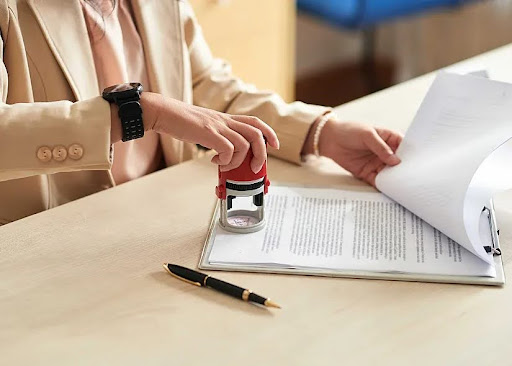
The Upper West Side has a particular kind of pace. It is not always fast, but it is always moving. Mornings spill out of prewar lobbies and brownstone stoops. Afternoons drift past school pick-ups, medical appointments, and quiet errands that still somehow feel time-sensitive. And then, often without warning, a document enters the room and changes the temperature. A form that cannot be “just emailed.” A signature that must be made in front of someone commissioned by the state. A deadline that becomes real the moment we notice the line that says “notarized”.
That is where Upper West Side notary services start to matter in a practical, grounded way for NYC residents. Notarization is not glamorous. It is not meant to be. It is meant to be clean, verifiable, and steady, like a door that actually locks when it closes. Yet the experience of getting something notarized in New York can feel surprisingly emotional. We are often signing under pressure, or in the middle of change, or with the faint hum of risk behind the paperwork. When we understand what a notary does, what they do not do, and how to prepare, the whole process gets calmer. It turns from a scramble into a small, controlled moment of order.
What A Notary Actually Does In New York City
A notary is a state-commissioned official who verifies identity, confirms willingness, and witnesses a signature, then completes a notarial certificate. That is the center of it. Notaries help deter fraud by making sure the person signing is who they say they are, and that the signature is not being forced, rushed, or forged.
At the same time, notarization has limits that protect everyone involved. Notaries are not there to judge whether the deal is wise, the document is fair, or the terms are in our best interest. Their role is narrower, more focused, and precisely because of that, legally useful. When we enter the appointment understanding the scope, we arrive calmer, and we leave with fewer surprises.
Why Upper West Side Residents Need Notary Services So Often?
In the Upper West Side, notarization often sits at the intersection of real life and real property. Co-ops and condos, leases and subleases, refinancing packages, occupancy affidavits, and building-specific forms appear constantly. We may be dealing with management requirements that have their own checklists, their own timing, and their own insistence that everything be executed the first time correctly.
A notary does not “approve” these documents, but they do ensure the signature is properly witnessed and recorded. That can be the difference between a smooth submission and a frustrating rejection. In a neighborhood where people balance busy careers, family schedules, and building logistics, getting notarization right the first time is not perfectionism. It is a relief.
Notarization Does Not Make A Document “Legal”
One of the most common misunderstandings is the idea that notarization automatically makes a document legal or enforceable. Notarization does not create legality from nothing. It supports authenticity. Think of it like a quiet verification stamp on the human part of the transaction. The notary confirms identity and proper execution. The document’s legal effect still depends on the document itself, the applicable law, and the underlying agreement.
This is why it matters to arrive prepared. Notarization is not complicated, but it is exact. In New York, small technical mistakes can waste time, and time is the one thing the city does not like to refund.
How We Prepare For A Smooth Notary Appointment
Preparation starts with the document, but it does not start with signing it. A notary typically must witness the signature, which means we should not sign in advance unless the instructions clearly say a signature may be acknowledged after the fact. Many documents require a fresh signature in front of the notary, especially when a jury is involved, where we are swearing or affirming that the contents are true.
If we sign too early, we can end up having to reprint, re-sign, or reschedule. A good habit is to bring the document unsigned, read it calmly beforehand, and flag any blanks that must be completed before notarization. Notaries generally cannot notarize a document with significant blank spaces, because blanks invite later alteration. The goal is to leave as little room as possible for confusion.
Identification And Name Matching Matter More Than People Expect
Identity verification is the heart of notarization. We need valid, government-issued identification that matches the signer. In practice, that often means a driver’s license, a state ID, a passport, or another acceptable ID, depending on the situation.
The name on the document and the name on the ID should align closely. If there is a mismatch, we should slow down and address it before the appointment, not during it. In New York, small differences in spelling can cause a big administrative headache, especially when the paperwork will be filed, recorded, or sent abroad.
Mobile Notary Services And Why They Fit Manhattan Life
The Upper West Side adds its own texture to the logistics. We may be in a building with a doorman, or a walk-up where timing matters. We may be meeting in a lobby, a quiet corner of a cafe, a hospital waiting area, or an office with a calendar packed tight. This is why mobile notary support matters to NYC residents. Convenience is not laziness here. It is urban survival.
When notarization comes to the signer, we reduce missed appointments, reduce travel friction, and make it easier to handle urgent paperwork with dignity. For families, professionals, and older adults, the value is not just speed. It is comfortable and controlled.
Hospital And Care Setting Notarizations Require A Gentle Pace
Healthcare-related notarizations can feel tender and immediate. Documents like health care proxies, powers of attorney, consent forms, and sworn statements may arrive at moments when the room already feels heavy. In these settings, professionalism is not just about stamping and signing. It is about pace. It is about explaining the process clearly, confirming willingness, and making sure the signer is alert enough to understand what they are signing.
Notaries are not medical evaluators, but they must be attentive to obvious signs of incapacity or coercion. When the stakes are personal, the process has to be calm, steady, and respectful.
Understanding Acknowledgments Versus Jurats
Many delays happen because people do not realize there are different notarial acts. The two common ones are acknowledgments and jurats. An acknowledgment means we are confirming that we signed the document voluntarily. A jurat means we are swearing or affirming that the contents are true, and we sign in front of the notary as part of that oath-style act.
The document usually indicates which one it requires. When we follow what the document asks for, the notarization aligns with the purpose of the form. When we guess, it can create rejection later, especially with agencies that are strict about certificate wording.
Apostille And Document Authentication For International Use
One of the biggest reasons people seek notary support in New York is international use, which is where apostilles and document authentication come in. An apostille is a form of authentication used when a document will be presented in another country that recognizes the apostille system. If the destination country does not accept apostilles, a different authentication path may be required.
Either way, the goal is the same. We are proving that a public document, or a notarized document, is legitimate under New York’s authority, so it can be trusted elsewhere. This is where New York’s process can surprise people. Often, apostille work is not just one step. A notarized document may need county-level certification before state-level authentication, depending on the document type and the requirements.
Vital records can require specific versions or additional letters, especially when they originate from New York City agencies. Educational documents may require school-level certification, then notarization, then authentication. Each category has its own rules, and apostille requests can feel stressful when we try to do them without a roadmap.
A Calm, Practical Way To Approach Apostille Requests
If we want the process to feel calmer, we can treat it like choreography. First, we identify what the document is and where it came from. Then, we confirm what the destination country requires. Then, we make sure we have the correct form of the document, meaning the right issuance, the right certification, and the right signatures. Only after that do we begin the authentication path.
This prevents the most common apostille mistake, which is submitting a document that looks right to us but is not in the proper official form for the state to authenticate. In a city full of hurry, apostille work rewards slow accuracy.
What A Notary Cannot Do, and Why That Protects Us
A notary generally cannot give legal advice unless they are separately qualified to do so. They cannot tell us which form to choose, what clause to add, or how to structure an agreement. They cannot notarize someone who is not present, and they cannot ignore identity verification because we are in a rush.
These boundaries are not obstacles. They are the reason notarization has any weight at all. A notary’s value comes from being flexible in scheduling, but not flexible in verification.
Witnesses, Multiple Signers, And New York Logistics
The Upper West Side has many signings that involve multiple parties, multiple IDs, and sometimes witnesses. Real estate packages, parental consent letters for travel, affidavits connected to housing, and estate planning documents often require careful coordination.
A best practice is to gather everyone’s IDs in advance, confirm who must be present, and confirm whether witnesses are required. People often assume a notary can serve as a witness automatically. Sometimes that is possible, but many documents prefer disinterested witnesses. We reduce last-minute chaos by verifying witness requirements early, even if it feels like a small detail.
Electronic Notarization And What To Expect
New York allows electronic notarization under specific requirements, and it can be helpful when signers are in different places or when timing is tight. But electronic notarization is still structured. It requires a compliant process. It is not simply a video call and a screenshot.
When we choose electronic options, we should treat them with the same seriousness as in-person notarization, because the expectations are just as real. The calmer we are about the steps, the less intimidating the technology becomes.
The Documents Upper West Side Residents Most Commonly Notarize
In daily Upper West Side life, the documents that appear most often are surprisingly human. Powers of attorney, affidavits, travel letters, name affidavits, letters connected to schools, landlord statements, insurance paperwork, and business forms show up constantly. Notarization touches these moments because it is a trust mechanism.
There is something quietly comforting in that. We live in a city that can feel anonymous. Notarization is one of the few processes that slows the moment down just enough to say, we see you, we verified you, we recorded this act with care.
A Simple Checklist That Keeps The Process Smooth
If we want the smoothest experience, we can keep a simple checklist that feels like a calming routine. We bring a valid ID. We bring the full document, complete but unsigned, unless instructed otherwise. We confirm whether we need witnesses. We make sure the signer is present and able to understand what they are signing. We choose a setting with enough light and space to write comfortably. We give ourselves a few extra minutes, because rushing makes mistakes more likely.
This is the practical side of peace. Notarization does not have to feel like a disruption. When we treat it like a small craft, a precise sequence, it becomes smooth.
Conclusion: A Calm Path Forward When Timing And Details Matter
In the end, Upper West Side notary services are not just about location. They are about rhythm. They are about meeting NYC residents where life actually happens, in apartments, hospitals, offices, and in between, and helping documents move forward without adding stress to moments that already carry enough of it. When we understand notarization clearly, we stop treating it like a surprise obstacle, and we start treating it like a tool we know how to use.
NYC Notary Pros makes notarization, apostille, and document authentication feel straightforward and steady, especially when timelines are tight and the details matter. With over 15 years of experience, a highly responsive team, and hundreds of successful mobile notarizations and apostille requests handled from start to finish, they focus on clear communication, flexible scheduling, and a process that stays calm even when the paperwork feels urgent. If we want a smoother, more reliable way to complete time-sensitive documents in Manhattan, we can connect with NYC Notary Pros through their website and book support that fits the real pace of the Upper West Side.