

The Financial District doesn’t slow down for paperwork. If you work or live in Lower Manhattan, you already know that legal and business documents come with tight deadlines, specific requirements, and zero room for error. Notary services in FiDi, NYC, give residents and professionals a reliable way to get documents authenticated quickly, but knowing which documents actually need notarization, and what the process involves, makes a real difference when time is short.
Whether you’re closing on a property, executing a business contract, or handling a personal legal matter, this guide walks you through exactly what a notary handles, what they don’t, and how to walk into your appointment fully prepared.
What a Notary Actually Does (And What They Don’t)
A notary public is a state-commissioned official authorized to perform specific acts of authentication. In New York, notaries earn their commission through the New York State Department of State, and their authority is clearly defined by law.
The core job of a notary is three things: verifying the identity of the person signing, witnessing the act of signing, and applying their official seal and signature to confirm the signing was legitimate. That’s it. Notarization doesn’t validate the content of a document or make it legally binding on its own. It confirms that a real, identified person signed it willingly in front of a credentialed witness.
What notaries don’t do is just as important to understand before your appointment. A notary cannot draft your documents, advise you on their legal meaning, or tell you whether what you’re signing is in your best interest. If you need help understanding a contract, a lease, or a power of attorney, that conversation belongs with a licensed attorney. Walking into a notary appointment expecting legal guidance will leave you frustrated, because it’s simply outside the scope of what a notary is authorized to provide.
This clarity matters. Knowing what to expect means you come prepared, your appointment runs smoothly, and you leave with a properly notarized document instead of having to reschedule.
The Most Common Documents Notarized in FiDi
The Financial District has a unique mix of residents, corporate offices, law firms, and financial institutions. That variety shows up in the range of documents that come through our office. Here’s a breakdown of what people most commonly bring in.
Real Estate Documents
FiDi sits at the center of one of Manhattan’s most active real estate markets, with high-volume commercial transactions and a growing residential presence. Deeds, mortgage agreements, refinancing packages, lease agreements, and closing documents all frequently require notarization. If you’re buying, selling, or refinancing property anywhere in New York, your closing package almost certainly includes at least one document that needs a notary’s seal before it can be recorded or submitted. Our real estate notary services cover the full range of documents involved in property transactions, from simple lease addenda to complex closing packages with multiple signers.
Business and Financial Documents
Law firms, banks, and corporate offices throughout FiDi process notarized documents regularly. Contracts, corporate resolutions, loan agreements, partnership agreements, compliance filings, and authorization letters all fall into this category. Notarization adds a layer of legal authenticity that many institutions require before executing significant transactions, and it creates a verifiable record that both parties signed under their own free will.
Legal Documents
Affidavits, sworn statements, and depositions regularly require notarization to be accepted in court or by government agencies. Immigration applications, identity verification filings, and certain court documents also often carry this requirement. If you’re submitting documentation related to a legal proceeding or a government application, it’s worth confirming upfront whether notarization is required and whether any additional certifications are needed alongside it.
Personal Documents
Not every notarization involves a major transaction. Power of attorney forms, consent letters for minors traveling abroad, name change paperwork, healthcare proxy designations, and personal authorization letters are all common personal documents that notaries handle every day. These often carry the same sense of urgency as business documents, because a missing notary seal can delay a trip, hold up a legal process, or prevent a family member from getting the care they need.
Documents That Often Require an Apostille, Not Just Notarization
Some documents go one step further than standard notarization. If you’re sending paperwork overseas, such as for a foreign university application, international business filing, adoption process, or legal use in another country, you may need an apostille in addition to notarization.
An apostille is a certificate that authenticates the origin of a public document so it gets recognized in countries that are part of the 1961 Hague Convention. The process begins with notarization, then the document goes through an additional certification step at the state level before it’s considered valid internationally.
This is a frequent point of confusion among people who are preparing documents for international use. A notarized document is not automatically ready for overseas submission. The apostille is a separate layer that follows notarization, and skipping it can result in rejected documents and costly delays. If you’re not sure whether your specific document requires an apostille, ask before your notary appointment, not after. We handle both steps and can walk you through what your document actually needs. Learn more about our apostille services.
Do You Need to Come In, or Can the Notary Come to You?
For many people working in the Financial District, leaving the building midday isn’t realistic. Between meetings, deadlines, and tight schedules, taking time out to visit a notary office can feel like more of a production than it needs to be. That’s exactly why mobile notary services exist.
A mobile notary is a fully commissioned notary who travels to your location rather than requiring you to come to an office. We come to your law firm, your conference room, your office lobby, or wherever the signing needs to happen. The appointment works the same way as an in-office visit. We verify your identity, witness the signature, and apply the official seal on the spot.
Mobile appointments are especially practical for real estate closings where multiple parties need to sign in the same session, for businesses that process notarized documents frequently, and for individuals who are managing a time-sensitive situation and can’t afford delays. If you’re unsure which option makes more sense for your specific document, our team can help you decide. Take a look at our full range of services to get a sense of what we offer across both in-person and mobile formats.
What to Bring to Your Notary Appointment
Regardless of whether you’re coming into our office or we’re coming to you, a few things are always required. Missing any of these will stop the appointment before it starts.
A valid, government-issued photo ID. A driver’s license, passport, or state-issued ID all work. The most important thing is that the ID is current and unexpired. An expired passport or license won’t cut it, even if it’s only been out of date for a week. If you’re unsure whether your ID qualifies, call ahead before making the trip.
An unsigned document. This is the most common mistake we see from first-timers, and it’s an easy one to make. The notary must witness you signing the document in real time. If you’ve already signed it at home or at the office, the appointment can’t proceed. Bring the document blank on the signature lines, and sign it only once the notary is present and has verified your identity.
All required signers. If a document requires signatures from multiple people, everyone who needs to sign must be present at the same time, each with their own valid photo ID. Partial signings create complications, especially for legal and real estate documents that need all parties present for the notarization to be valid.
A fully completed document. Notaries cannot notarize documents that contain blank fields meant to be filled in after the fact. Every section of the document needs to be completed before the appointment. If there are sections you’re unsure how to complete, get those answered before you arrive.
Conclusion
Notary services in FiDi, NYC, are more accessible than most people realize, and the appointment itself is quick once you show up prepared. Knowing what documents qualify, understanding the difference between notarization and an apostille, and arriving with the right ID and an unsigned, complete document, those three things will make your experience fast and smooth every time.
If you’re handling something more complex, like a real estate closing or documents intended for international use, reach out in advance so we can make sure you have everything lined up.
About NYC Notary Pros
We provide professional notary services throughout the Financial District and across Manhattan, including mobile appointments, real estate notarizations, estate planning documents, and same-day apostille processing. Our team handles both scheduled and urgent appointments, so your documents get done without unnecessary delays. Get in touch to book your appointment or ask about same-day availability.
Frequently Asked Questions
What documents can be notarized at a FiDi notary office?
A wide range of documents qualify, including real estate agreements, affidavits, power of attorney forms, business contracts, consent letters, sworn statements, and personal authorization documents. If you’re not sure whether your specific document requires notarization, a quick call to our office will give you a clear answer before you make the trip.
Can a notary in NYC notarize real estate closing documents?
Yes. Real estate documents are among the most common items we notarize in the Financial District, covering everything from deeds and mortgage agreements to full closing packages. We also offer mobile notary appointments for closings where multiple parties need to sign in the same session.
Do I need to sign my document before going to the notary?
No, and this is one of the most important things to know before your appointment. You must sign the document in front of the notary so they can witness it. Arriving with a pre-signed document means the appointment cannot go forward, and you’ll need to reschedule.
What’s the difference between notarization and an apostille?
Notarization verifies the identity of the signer and the authenticity of the signing. An apostille is an additional certification required when a notarized document needs to be officially recognized in another country. They are separate steps, and both may be required depending on where the document is going and what it’s being used for.
Can a mobile notary come to my FiDi office or building?
Yes. We offer mobile notary appointments throughout the Financial District and the surrounding areas of Lower Manhattan. Contact us to schedule a time, confirm your location, and we’ll take care of the rest.
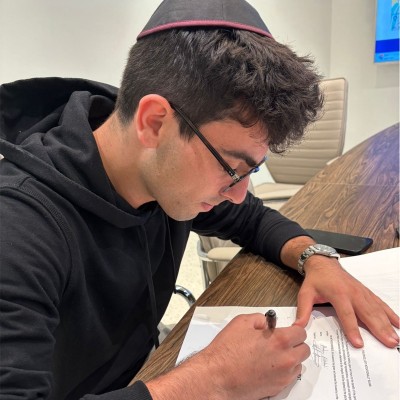
Sammy Chabbott is a highly experienced Licensed Notary Public and apostille specialist based in New York City. As the founder and primary expert at NYC Notary Pros, Sammy has dedicated his career to helping individuals, families, and businesses navigate complex document authentication processes with professionalism and care. With a deep understanding of notarial laws, apostille requirements, and international document standards, he ensures every service, from notarizations to apostille certifications, is completed accurately and efficiently.
Sammy’s expertise includes mobile notary services, same‑day apostille processing, and legal document support, making vital paperwork simpler for clients across Manhattan, Brooklyn, Queens, the Bronx, and Staten Island. His commitment to reliability, attention to detail, and client satisfaction has established NYC Notary Pros as a trusted partner for notarization and international document needs.